
Sonic The Hedgehog 3 story
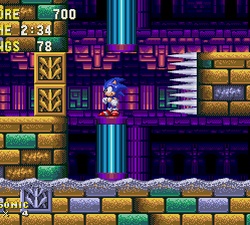
For a lot of us, Sonic The Hedgehog 3 starts the same way: the chime of rings, the lush green of Angel Island, and that blue blur that could turn a Genesis (Mega Drive) into a wonder machine in a heartbeat. Some just called it “Sonic 3,” others flexed with the full title, and on schoolyards it was “the blue hedgehog” or “Sonic’s island adventure.” But behind that breezy intro sat a whole saga—ambition, deadlines, and a clever trick that made the game more than just a single board in a plastic shell.
How it was envisioned
After Sonic 2 blew up, the Sega Technical Institute didn’t want a simple sequel—they wanted a sweeping quest that felt like one continuous world. Led by Yuji Naka, the team built Sonic The Hedgehog 3 as a connected journey: from the fiery touchdown on Angel Island to the last sprint at Launch Base. Zones didn’t just line up—they flowed like scenes in a film: flames leapt to palm trees, debris stayed in frame, and Robotnik (the name many still use for Doctor Eggman) didn’t pop in from a load screen—he crashed the stage in real time, reshaping the world as you ran.
And then came someone who instantly felt like he’d always been there—Knuckles the Echidna. Guardian of the Master Emerald, stern and a little too trusting, he cut Sonic off on a dime and smashed carefully laid plans with one punch. A simple move—a new character with zero dialogue—and the whole world shifted: Chaos Emeralds, ancient ruins, hidden routes—everything clicked into a legend about a floating island and a wily villain pulling strings from the shadows.
Split to make it whole
Ambition outpaced the calendar. Marketing beats, launch windows, obligations—the project got too big for a single drop. The solution—now remembered as 16-bit magic—was born from practicality: split it into two halves, Sonic The Hedgehog 3 and the follow-up Sonic & Knuckles, and ship that “lock-on” cartridge. You know, the one with the flip-top: slot Sonic 3 into Sonic & Knuckles and you get the full tapestry—Sonic 3 & Knuckles—where the story actually wraps. It felt like a secret passage: one click and suddenly new routes open, extra endings appear, Super Sonic shreds the breeze, and Knuckles has his own wall-climbing paths through spike-riddled gullies.
There was another crowd-pleaser at home: a battery inside the cart meant saves were no longer a luxury. You could shelve Hydrocity or Marble Garden till tomorrow, come back to Blue Sphere—the hypnotic special stages—and not worry about losing it all. Small detail for Sega, big comfort for players—the kind your thumbs still remember.
Music and myths
Talking Sonic 3 without its soundtrack is like recalling a carnival without the lights. Hydrocity’s bassline, Carnival Night’s rubbery bounce, Ice Cap’s crystalline chill—these hooks stick forever. Back then, rumors flew that Michael Jackson had a hand in the score: some swore they heard his team’s fingerprints in the drums and synths, others lined up motifs with later tracks. The details were hazy, debates ran hot, but the idea fit the game’s vibe: a superstar dream on a platform where, in a heartbeat, you’re racing forward, scooping rings, and grinning to the beat.
And it wasn’t just melodies. Sonic The Hedgehog 3 turned sound into storytelling. From the clicks in bonus stages to the heavy thrum of Launch Base machinery, the music didn’t just decorate—it drove you on. When Robotnik dropped another boss or when Knuckles flipped a switch and killed a bridge, the soundtrack winked: “Hang tight—it only gets better.”
How it landed in our hands
Sonic 3 launched as a Genesis flagship and quickly became the face of Sega. In rental shops and living rooms, the clamshell case snapped open more than most: that bright-label cart—sometimes pristine, sometimes scuffed and stickered—was instantly recognizable by silhouette alone. Some had the proper save-enabled original, others ran imports and bootlegs. You’d grab it for the weekend, swap it with friends, and bring it back with stories: the no-hit run through Angel Island, the clutch co-op save when Tails swooped in, the childhood brick wall that was Carnival Night’s infamous red barrel—until “that one friend” showed up and taught everyone the rhythm.
The game didn’t just sell—it spread in conversation. Zone names became passwords: say “Marble Garden” and your buddy hears that rattling hi-hat; whisper “Ice Cap” and you’re back on a snowboard under a shimmering dusk. And when someone scored Sonic & Knuckles, the lock-on experiments kicked off: some combined the carts for the “complete version,” others jammed in random games and accidentally unlocked endless Blue Sphere—a tiny universe inside the big adventure.
Why did it stick? Because Sonic The Hedgehog 3 on Mega Drive/Genesis was the place where speed shook hands with imagination. It showed scale without a word and made you feel like friends were always by your side: Tails, ready to lift you; Knuckles, who blocks you then becomes your guy; and even Robotnik, without whom the party wouldn’t taste as sweet. For many, Sonic 3 wasn’t a number in a series—it was a slice of life: flip on the console and you know what’s coming—rings, wind, and a road that stretches just beyond the horizon.